Refrigerated Cold Storage Solutions USA
Bizon Group Inc provides refrigerated cold storage containers for businesses that need insulated or actively temperature-controlled space for food distribution, beverages, agriculture, hospitality, logistics, manufacturing and other temperature-sensitive applications. Available options include operational refrigerated containers, insulated non-operational units and specialized cold-storage configurations, with product suitability determined by the individual unit, required temperature range, power supply and intended use.

Refrigerated Cold Storage Solutions for US Businesses
Review the detailed inventory of operational refrigerated containers and insulated non-operational units suitable for US commercial cold storage applications. Before purchasing, verify the individual unit condition, refrigeration machinery status, machinery series, internal lining materials, power requirements, and current pricing displayed on each product page.






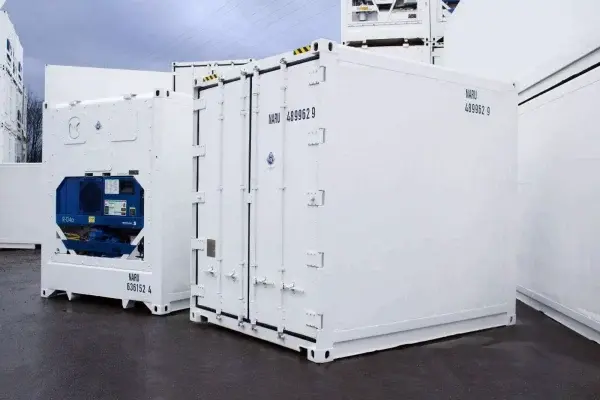


How Refrigerated Shipping Containers Control Temperature
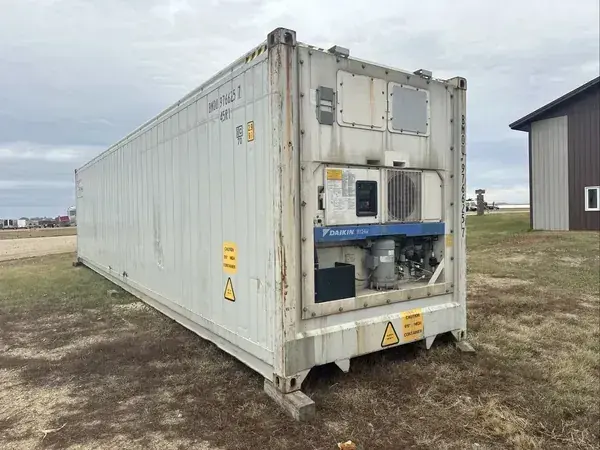
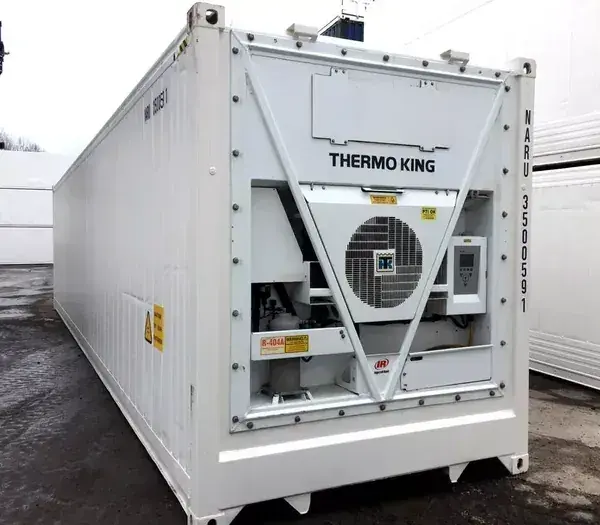
An operational refrigerated shipping container combines insulated walls, doors, ceiling and flooring with refrigeration machinery and controlled internal airflow. Unlike a standard dry container, a reefer is designed to circulate conditioned air around the stored cargo. Performance depends on the individual refrigeration unit, set point, ambient conditions, power supply, loading pattern, door usage and maintenance.
T-bar or channel-style flooring is commonly used in refrigerated containers to support airflow beneath cargo. Stored goods should not block required air passages, because correct airflow is essential for consistent temperature management.

Operational vs Non-Operational Refrigerated Containers
Comparison
Machinery Function
Enclosure Design
Primary Benefit
Operational Reefer
Functional refrigeration equipment installed and tested for operation.
Insulated walls, doors and ceiling with internal airflow management.
Active temperature management (heating or cooling) for sensitive cargo.
Non-Operational / Insulated Reefer
Refrigeration machinery is present but is not functioning or is de-commissioned.
Uses the same insulated enclosure as an operational unit for thermal protection.
Passive thermal stability for goods needing protection from environmental heat or cold.
An insulated non-operational reefer should not be presented as temperature-controlled storage. Active temperature management requires suitable functioning refrigeration equipment and power.
20ft vs 40ft Refrigerated Containers
Comparison
20ft Refrigerated Container
40ft Refrigerated Container
External Dimensions
20'L x 8'W x 8'6"H
40'L x 8'W x 9'6"H (High Cube)
Storage Footprint
Ideal for small lots or sites with limited space.
Requires double the site length; better for high-volume inventory.
Handling/Access
Easier to place; often used for portable seasonal storage.
Best for fixed distribution hubs where mass volume is primary.
Airflow Requirements
Requires compact, efficient loading to maintain circulation.
Internal fans must push air further; requires strict pathing.
Static systems allow commercial retailers to manage stock overflow during peak seasons. Multiple Refrigerated Shipping Containers offer critical redundancy, ensuring that power or machinery maintenance doesn't risk your entire inventory.
Thinking About Capacity and Redundancy
Cold-storage planning should consider more than total cubic capacity. Buyers should evaluate loading patterns, required airflow, product access, inventory value, maintenance planning and the operational impact of refrigeration downtime.
Planning Factor
Why It Matters
Required Storage Volume
Ensures the container cubic footprint matches your peak inventory requirements.
Airflow Clearance
Cargo should not be loaded above the red line or block the flooring to ensure uniform cooling.
Product Access
Loading layout must account for picking frequency and first-in, first-out inventory management.
Inventory Value
Directly influences the requirement for equipment monitoring and backup power systems.
Maintenance Strategy
Routine refrigeration service is required to prevent machinery failure and maintain set points.
Redundancy
Utilizing multiple smaller units instead of one large enclosure protects inventory during repairs.
Site Power Capacity
Confirmed site amperage and voltage must match the reefer machinery specifications.

Static systems allow commercial retailers to manage stock overflow during peak seasons. Multiple Refrigerated Shipping Containers offer critical redundancy, ensuring that power or machinery maintenance doesn't risk your entire inventory.

Refrigerated Container Applications
Food & Distribution
Refrigerated containers can provide temporary, overflow or dedicated temperature-controlled storage where the individual unit is suitable for the products and operating requirements.
Agriculture
Reefer containers can support suitable agricultural products where the required temperature, ventilation, loading practices and post-harvest handling conditions are properly matched to the unit.
Retail & Hospitality
Useful for seasonal inventory, event operations, back-of-house cold storage and temporary capacity during renovations or peak demand.
Industrial & Specialized Storage
Temperature-managed containers may support materials, equipment or processes that require controlled conditions, subject to the technical requirements of the individual application.
Refrigerated Container Construction and Operating Considerations
Refrigerated containers differ from standard dry containers because their insulated enclosure, sealed doors, internal airflow system and refrigeration machinery work together to manage internal temperature. Construction details vary by manufacturer and series, so insulation thickness, interior lining, flooring design and refrigeration equipment should be confirmed for the individual unit.
Component
Typical Function
Insulated Walls / Ceiling / Doors
Polyurethane foam insulation maintains thermal stability and reduces machinery workload.
Refrigeration Machinery
Integrated unit that actively cools or heats the interior to the required set point.
Internal Airflow System
Fans circulate conditioned air from the bottom (delivery) up through the cargo.
T-Bar / Airflow Flooring
Aluminum floor structure designed specifically to allow airflow under and around cargo.
Controller
Microprocessor that monitors temperature, manages defrost cycles, and records operation data.
Door Seals
Heavy-duty gaskets ensure an airtight enclosure to prevent thermal leakage.
Drainage / Defrost System
Port and piping system designed to remove internal moisture and condensate properly.
Consult the individual unit documentation for verified performance specs and machinery details.
What Specifications Should You Check Before Buying a Reefer Container?
Buying a refrigerated container involves verifying the physical condition, machinery type, and electrical compatibility against your site setup. Performance and suitability depend on individual unit specifications and required maintenance standards.
Specification to Verify
Why It Matters
Machinery Manufacturer
Availability of spare parts and localized maintenance support in your US region.
Current Electrical Configuration
Confirms if the default machinery requires 460V 3-phase or if a transformer is required for your site.
Insulation Integrity
Damaged or detached polyurethane foam reduces thermal efficiency and increases compressor cycles.
Internal Lining & Flooring
Determines suitability for food-grade, pharmaceutical or heavy industrial cargo handling.
PTI (Pre-Trip Inspection) Export Status
Indicates if the refrigeration machinery has passed functional testing before release.
Door Seal and Air-Lock Condition
Essential for maintaining vacuum pressure and efficient temperature control and humidity levels.
Buyers intending to store food, pharmaceutical, medical, or other regulated products should verify that the specific individual unit, its cleaning history, and its performance documentation meet the precision and regulatory standards required for their application.
Power Needs and Site Preparation
Operational refrigerated containers require a compatible electrical supply for the specific refrigeration machinery installed on the unit. Voltage, phase, frequency, plug configuration and current requirements can differ between reefer models, so the electrical specification of the individual container must be confirmed before installation.
Where a site's available power supply does not match the reefer equipment, a qualified electrical professional should determine whether suitable electrical infrastructure or transformation equipment is required.
Site Requirement
What to Confirm
Electrical Supply
Confirm site voltage, phase, and available amperage match the unit's required operating specification.
Connection Point
Check the distance from the power source to the unit and ensure the plug configuration is compatible with the site receptacle.
Ground Surface
Ensure a level, hard-standing surface (concrete, asphalt, or compacted gravel) that can safely support the fully loaded weight of the container.
Service Access
Maintain clear space around the refrigeration machinery end for airflow, routine inspection, and maintenance access.
Drainage
Verify the site can accommodate the management of condensation and defrost cycle water runoff from unit drainage points.
Airflow
Confirm the machinery end is ventilated; avoid Placing units in fully enclosed or restricted spaces where heat cannot dissipate.
Delivery Access
Check for overhead obstacles (branches, wires) and ensure adequate clearance for truck maneuvering and container placement.
New vs Used Refrigerated Containers
Comparison
Machinery Condition
Structural Interior
Aesthetic Finish
New / One-Trip Refrigerated Container
New machinery with energy-efficient controller technology and manufacturer warranty protection.
Pristine food-grade stainless steel linings, undamaged insulation, and optimum door seal integrity.
Factory-grade exterior suitable for high-visibility zones or commercial customer-facing areas.
Used Refrigerated Container
Inspected and testing legacy machinery; reliability and efficiency depend on individual unit age.
May feature interior dents or staining; thermal performance depends on integrity of insulation layer.
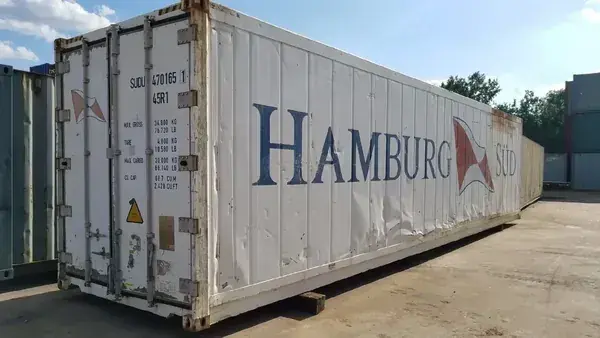
Shipping line liveries and surfacing rust common; functional aesthetic for industrial storage sites.
Note: Refrigeration machinery should be evaluated separately from the physical condition of the container shell. While a container may show external wear, its refrigeration unit, electrical controller, and thermal insulation must meet the operational requirements of your site and cargo.
Find the Right Refrigerated Container
Compare available refrigerated and insulated containers by size, operating condition, intended use and current price. Review each product's individual specifications carefully, particularly refrigeration status, electrical requirements and temperature capability, before purchasing.
